
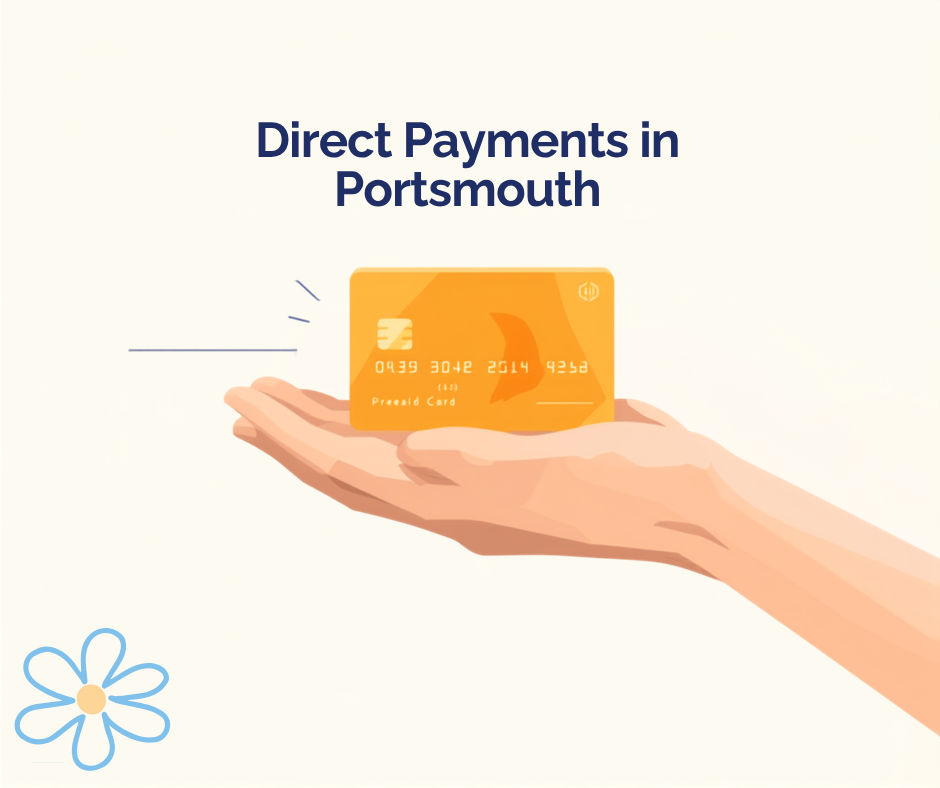
Portsmouth City Council will hand you a prepaid card and let you decide who looks after a relative — not a caseworker, not a rota someone else built. Most people who qualify for a direct payment don’t know it’s on the table, or assume the paperwork isn’t worth the hassle. It usually is.
What a direct payment is
If the council has assessed you or a family member as having eligible care and support needs, you don’t have to let them arrange everything. A direct payment is the council giving you the money instead, so you employ, buy, and schedule the support yourself. You choose who provides it, when they turn up, and how the care actually gets delivered day to day — the council’s job shifts from organiser to funder.
You’re not locked into an all-or-nothing choice, either. Plenty of people use the council for some parts of their support and manage the rest themselves through a direct payment.
What you can spend it on
The rules are broader than most people expect. A Portsmouth direct payment can go towards:
Employing a personal assistant directly, for one-to-one help with daily tasks and personal care. Buying care from a registered domiciliary care agency, where the agency handles recruitment, training, and cover, and you keep the choice of who’s sent. Arranging respite or a short break, for you or whoever’s currently doing the caring. Paying a micro-provider — a small, local, independent service, often more flexible on timing than a larger agency. And, less well known, supporting the carer themselves, if part of the assessed need is about sustaining someone else’s ability to keep caring.
How the money reaches you
Portsmouth pays direct payments every four weeks onto a prepaid card. You use the card to pay for care and support online or by phone, and it can’t go overdrawn — there’s no risk of accidentally spending money you don’t have. If your financial assessment means you’re required to contribute towards your own care, that arrives as a separate monthly invoice rather than coming out of the card.
Whether you contribute anything, and how much, depends on a means test against your savings and income. For 2026/27, the government’s capital limits sit at £23,250 (above this, you’re generally a full self-funder) and £14,250 (below this, savings aren’t counted at all, with a sliding scale in between). Worth checking against your own circumstances rather than assuming either way — the council’s financial assessment team will confirm your exact position, and we’ve written more on the wider cost-of-care picture on our Cost of Care page.
Getting one set up
The process runs through four steps once you’re in the system. First, an assessment establishes your care needs and agrees a support plan. Second, the council explains what taking on a direct payment actually involves — the benefits and the responsibilities that come with managing your own money and your own care arrangements. Third, if you choose to go ahead, you’re referred to Portsmouth’s Direct Payments team. Fourth, a direct payments officer visits in person to walk through what’s expected of you and hand over the practical tools for managing the payment.
If you’re already receiving council-arranged care and want to switch, you don’t have to wait for a review — just raise it with your social care worker directly.
If managing it yourself feels like too much
Taking on a direct payment doesn’t mean taking on all the admin alone. If you’d rather someone else held the responsibility, you can appoint a nominee — usually a trusted friend or family member — and the council will check they’re suitable before handing over that role. Where someone lacks the capacity to consent to a direct payment themselves, an authorised person can be appointed instead, with the same information and support as if they held it directly. And if you want the choice and flexibility a direct payment gives you without the financial admin, a managed account service can run the money on your behalf while you still make the care decisions.
Where we come in
We’re a live-in and domiciliary care business based in Portsmouth. If you’re holding a direct payment, or thinking about applying for one, get in touch to talk through what live-in or hourly support could look like for your situation — no obligation.
Dave Drury, Registered Manager, Daisy Homecare